Why Basketball Club Teams in San Diego Matter for Young Athletes
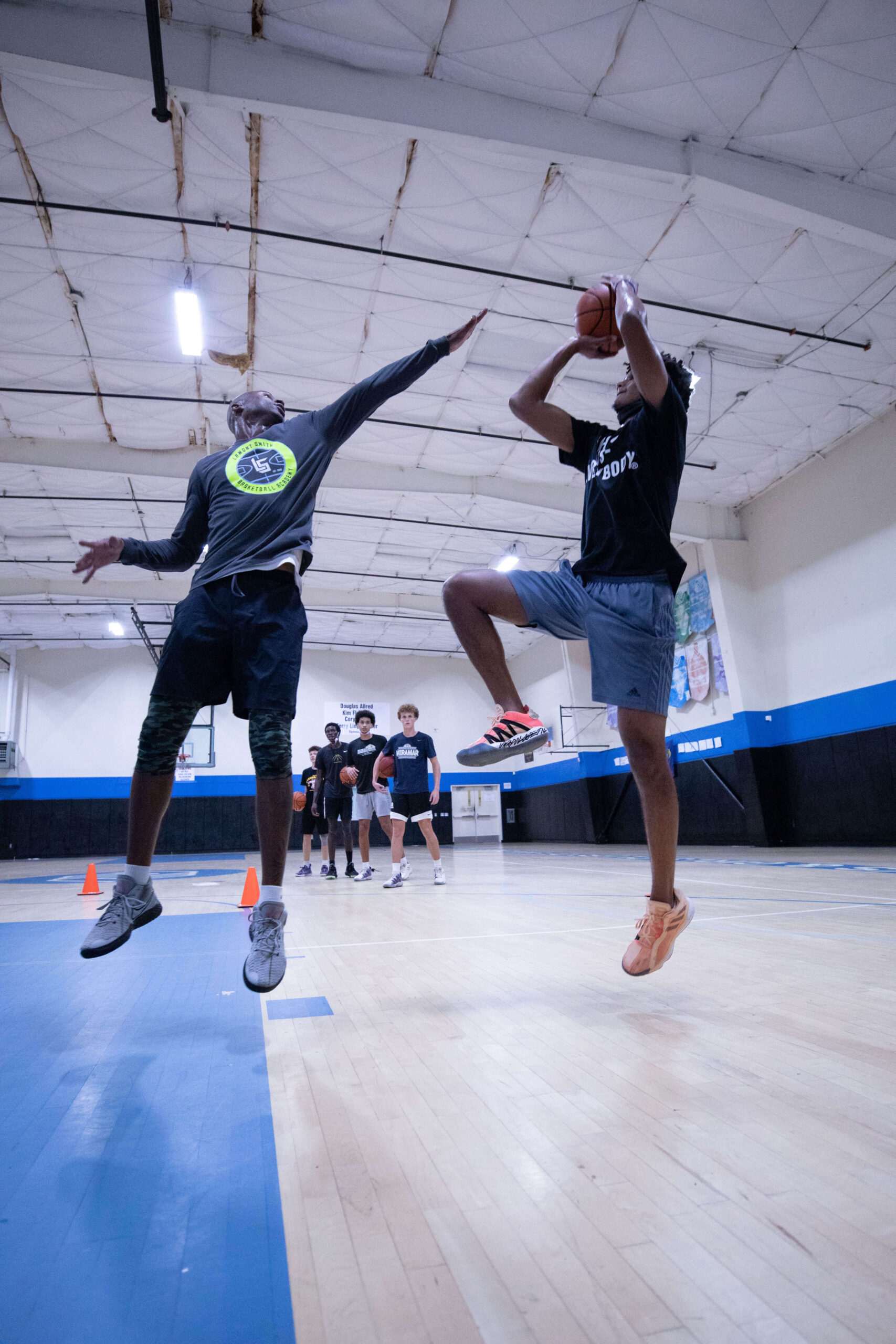
San Diego has never been a one-sport town. On any given weekend, fields are full, surf breaks are crowded, and school gyms are buzzing from early morning until evening. Basketball holds a special place in that mix because it gives young athletes something both simple and demanding, a ball, a hoop, and a game that asks for skill, decision-making, toughness, and teamwork all at once. For families trying to help a player grow, club basketball often becomes an important part of that journey.
That matters even more https://www.google.com/maps?cid=10211666664564973643 in a region like San Diego, where the talent pool is broad, the competition is layered, and opportunities can vary widely depending on where a family lives, what school a player attends, and how much guidance they have early on. When people search for Basketball Club Teams San Diego, they are usually looking for more than a schedule and a uniform. They are looking for a place where a young athlete can improve, compete, and find direction.
Club teams are not a magic fix. They are not right for every child at every age, and not every program is equally strong. Still, when a team is well run and the fit is right, the impact can be significant. I have seen players who were buried on school benches become confident contributors after one serious spring and summer with a good club team. I have also seen naturally talented kids plateau because they stayed in comfortable settings too long. The difference is rarely about hype. It is almost always about reps, coaching, accountability, and being pushed by the right peers.
The gap club basketball fills
School basketball, even at strong programs, has limits. A high school season is short compared with the amount of development most players need. Middle school options can be uneven. Recreational leagues are valuable for beginners, but they often do not provide enough structured teaching or consistent competition once a player starts showing real potential.
Club basketball fills that gap by extending the calendar and raising the standard of daily work. Instead of practicing a few months and then drifting, players stay connected to skill development and live competition throughout much of the year. That continuity matters. Basketball is a rhythm sport. Footwork, shooting mechanics, defensive habits, timing on cuts, angles in pick and roll coverage, those things improve through repetition over time, not through occasional bursts of effort.
In San Diego, that steady development can make a real difference because the region includes a wide range of basketball environments. Some athletes come from schools with deep rosters and experienced coaches. Others attend schools where basketball is not a primary focus, or where there simply are not enough advanced players in the gym every day. Club teams can level some of that imbalance. They give a motivated player access to better competition, more organized instruction, and a broader network than school alone may offer.
San Diego is a strong environment for growth
The local basketball scene has a character of its own. It is competitive, but it is not as compressed into one narrow pipeline as in some larger metro areas. Players in San Diego often need to be more intentional about finding the right development environment because talent is spread across the county. There are strong pockets in the South Bay, East County, North County, and central San Diego, and each area has its own feel, coaching personalities, and feeder patterns.
That geography is part of why club teams matter here. A player may be one of the best guards in a neighborhood league but still need exposure to bigger, quicker, more polished athletes from across the county or from travel tournaments in Southern California. Without that challenge, it is easy to get a false reading on where a young athlete really stands.
The advantage of playing in San Diego is that a serious club team can compete locally, then test itself against teams from Los Angeles, Orange County, the Inland Empire, and beyond. That is a healthy benchmark. It helps athletes and families see the truth of a player’s game. Maybe the handle is good enough in local play but breaks down against length and pressure. Maybe the shooter who looks automatic in practice struggles when defenders close hard. Maybe a player who rarely scores in school settings turns out to be a terrific rebounder and switch defender against higher-level competition. Club basketball reveals those things.
Development is about more than highlights
A lot of families first think about club basketball through the lens of exposure. They imagine tournaments, college coaches, social media clips, and big moments. Exposure has its place, especially for older high school players. But the strongest club programs know that development comes first.
Young athletes need an environment where details matter. A good club coach teaches a wing not just to catch and shoot, but to arrive on balance, show hands early, read the defender’s top foot, and make the right next play if the closeout is aggressive. A good coach corrects transition defense habits before celebrating a contested step-back three. A good team values screen angles, box outs, spacing, communication, and body language, even when those things do not end up in a highlight video.
That kind of teaching can be hard to appreciate from the bleachers because it does not always look flashy. But over time, it is what creates real players. I remember watching a teenager in San Diego who barely scored for months in club games. Some parents questioned why he was getting so many minutes. His coach kept pointing to his defensive rotations, his poise against pressure, and his willingness to make one more pass. By the next school season, he had become one of the most reliable guards in his league. Nothing about that jump was accidental. He had built useful habits before the points arrived.
Better competition sharpens self-awareness
One of the biggest gifts club basketball gives young athletes is honest feedback. Not always verbal feedback, though that matters too. The game itself becomes feedback.
A player may dominate weaker opponents through size alone, then realize against top club competition that strength without footwork is not enough. Another may learn that being fast is helpful, but changing pace is better. Bigs discover quickly whether they can defend in space. Guards find out whether they can handle ball pressure from defenders who pick up full court and do not get tired after one possession.
This kind of self-awareness is crucial. It prevents inflated expectations, but it also keeps players from underselling themselves. Some athletes need to be humbled a little. Others need proof that they belong. Club basketball provides both.
In San Diego, where athletes sometimes compare themselves only within school leagues or neighborhood circles, that broader mirror is valuable. It gives context. If a player can compete well against top teams across Southern California, that says something. If not, it also says something, and often early enough to adjust training, mindset, or role.
The right club team can teach role acceptance without limiting ambition
Every family wants development, but many quietly want a starring role too. That tension is real. Club basketball often becomes the first place where a talented young athlete has to confront the idea that being good is not the same as being the primary option.
Handled well, that is one of the most important lessons in youth sports.
A player might be the leading scorer on a school or rec team, then join a strong club roster and become a defender, rebounder, or secondary ball handler. At first, that can feel like a step backward. In reality, it is often growth. Learning how to impact a game without controlling every possession builds maturity and expands a player’s usefulness. College coaches, varsity coaches, and serious basketball people notice that.
The best club coaches in San Diego are honest about roles but not rigid. They help athletes understand where they fit today and what they need to improve if they want more responsibility tomorrow. That balance matters. Too much comfort and players stagnate. Too little clarity and they get frustrated.
Social growth is part of the value
Parents often focus on skill and competition, but there is another layer worth talking about. Club teams expose young athletes to teammates from different schools, neighborhoods, and backgrounds. That matters in a county as varied as San Diego.
A well-run team becomes a small social education. Players learn how to communicate with teammates they did not grow up with. They spend long days together at tournaments. They figure out how to recover from a bad game without dragging everyone down. They navigate success, disappointment, conflict, and trust. Those lessons are not secondary. They are part of what makes sports useful.
I have seen shy kids come alive once they found the right team culture. I have seen players who were used to doing everything alone learn to depend on others. I have also seen the opposite, talented athletes struggle because they could not accept coaching or connect with teammates. Club basketball puts those traits into the open quickly.
Parents need to understand the trade-offs
Club basketball can be excellent, but it asks a lot. Time, money, transportation, missed weekends, physical wear, and family stress are all real parts of the equation. Not every player needs a heavy travel schedule. Not every team that markets itself aggressively is worth the investment.
Families should be clear-eyed about the trade-offs. There is a difference between a program that develops players and one that mainly collects fees and tournament entries. There is also a difference between healthy ambition and over-scheduling. I have seen middle school athletes play so many games that their mechanics broke down from fatigue. I have seen high school players skip much-needed strength work because every weekend was another tournament.
When evaluating a program, these questions usually tell you more than the branding does:
- How often do they practice compared with how often they play games?
- Who is actually coaching the team, and what is that coach teaching?
- What kinds of players have improved in the program, not just what trophies have been won?
- Is the roster size reasonable enough for meaningful development minutes?
- Does the team communicate clearly about expectations, schedule, and player roles?
That short checklist can save families a season of frustration. Games are easy to advertise. Development is harder to prove, but it is the thing that matters most.
Younger players need a different kind of club experience
A common mistake is treating ten-year-olds and seventeen-year-olds as if they should be on the same type of club path. They should not.
For younger athletes, the priority should be skill foundation, joy, and sound habits. They need coaches who teach stance, balance, pivoting, passing angles, defensive movement, and finishing with both hands. They need enough structure to improve and enough freedom to stay creative. At that age, winning is not meaningless, but it should not drive every decision.
For older players, especially by early high school, the equation changes. Competition level matters more. Role definition matters more. Strength and conditioning begin to matter more. Exposure can matter, depending on the athlete’s goals and level. A sophomore who wants to play varsity or attract college interest needs to be tested against players who can reveal gaps in her or his game.
San Diego’s club landscape tends to reflect this divide. Some programs are strongest at teaching younger age groups. Others are better suited for advanced high school players seeking tougher tournament circuits. Families should not assume the best logo or biggest social media presence fits every stage.
Coaching quality changes everything
If I had to pick one factor that most determines whether club basketball helps a young athlete, it would be coaching. Not reputation alone, not playing pedigree alone, and not volume of games. Coaching.
A strong youth coach knows what to emphasize now and what can wait. That sounds obvious, but it is surprisingly rare. Some coaches teach overly complex systems to players who still cannot pass under pressure with either hand. Others chase quick wins by letting one talented athlete dominate possessions while everyone else stagnates. Some are energetic but vague. Others are knowledgeable but poor communicators. The best coaches blend clarity, standards, and patience.
They also know when to push and when to protect. A young player coming off a slump may need a direct challenge. Another may need one clear correction rather than six at once. Good coaching is not just instruction. It is judgment.
In the context of Basketball Club Teams San Diego, this is where families should spend most of their attention. Ask how a coach teaches. Watch a practice if possible. Listen to what gets corrected. Is the coach teaching spacing and decision-making, or simply yelling louder than everyone else? Does the gym feel organized? Do assistants know the players? Are mistakes addressed with purpose, or just emotion?
Those details tell the truth.
Exposure is earned, not purchased
The college conversation tends to hover over youth basketball, especially once players reach high school. It is understandable. Families want doors to open. But one of the healthiest things about a good club team is that it can reset expectations around exposure.
The reality is straightforward. Exposure follows ability, fit, timing, and performance more than branding alone. Playing on a travel team does not automatically create recruiting interest. Playing well, improving steadily, and competing in the right settings can.
That may sound basic, yet many families get pulled toward expensive promises. Better programs usually frame it differently. They help athletes build a game worth noticing. They put players in front of solid competition. They communicate honestly about level. They do not suggest that every hardworking player is on a scholarship path.
For some athletes, club basketball leads to college recruitment. For many others, it leads to something just as important, a better high school experience, more confidence, lasting friendships, and a deeper relationship with the sport. Those outcomes are not consolation prizes. They are meaningful returns.
The city’s basketball culture benefits when club teams do their job well
There is also a bigger picture here. When club teams in San Diego are run well, the effect reaches beyond individual rosters. Local high school programs get more prepared players. Younger kids have better examples to follow. Coaches across the region end up with athletes who understand practice habits, spacing, defensive principles, and accountability.
That raises the level of the whole ecosystem.
You can usually see it in small ways first. Freshmen arrive at school tryouts with better footwork. Wings know how to fill lanes in transition. Bigs understand verticality and help-side positioning. Guards have at least some experience reading traps and changing pace. Those are club habits carrying over into school basketball.
The opposite is true too. When club environments are sloppy or ego-driven, the damage carries over. Players learn bad shot selection, weak defensive habits, poor body language, and a distorted sense of what winning requires. That is why the quality of these programs matters so much. They are not just side activities. In many cases, they are shaping the basketball education of the region.
What families should look for before committing
The best decisions usually come from watching more than one workout or practice and asking practical questions rather than emotional ones. A young athlete may love the flashiest gym or the team with the loudest crowd, but long-term fit tends to come from substance.
A few signs generally point in the right direction:
- Practices are demanding and organized, with clear teaching points.
- Players are held accountable for defense, effort, and decision-making, not just scoring.
- Communication with families is direct and professional.
- The team schedule makes sense for the age group and level.
- Athletes appear engaged, coachable, and steadily improving over time.
None of those signs guarantee a perfect experience. Youth sports never work that way. But they usually indicate that the program sees players as long-term projects, not short-term marketing material.
Why this matters for the athlete, not just the résumé
At its best, club basketball helps young people become more capable versions of themselves. It gives them a place to struggle productively. It teaches them that confidence is built, not announced. It shows them that talent opens doors, but habits keep them open.
For San Diego athletes, that value is especially clear because the county offers enough competition to expose weaknesses and enough opportunity to reward growth. A good club team can connect those two realities. It can take a player from vague potential to defined progress. It can help a child who loves the game turn that interest into discipline. It can give structure to the years when identity, confidence, and ambition are still forming.
That is why Basketball Club Teams San Diego matter. Not because every player needs the same path, and not because club basketball is automatically better than every other option. They matter because, when chosen carefully and led well, they provide the kind of development environment young athletes often cannot get anywhere else. In a game where small improvements stack up and timing matters, that can change everything.
Lamont Smith Basketball Academy
888 Clairemont Mesa Blvd Suite T-2, San Diego, CA 92123
(619) 639-8778
FAQ About Basketball Club Teams San Diego
How can a player join an LSBA club team?
Players are evaluated during practices so the coaching staff can recommend an appropriate team and development level. Families should contact the academy to confirm current openings and evaluation details.
Are club teams available for newer basketball players?
Yes. LSBA describes multiple levels, including a developmental option for newer players as well as more competitive teams for athletes with prior club experience.
What do LSBA club team practices emphasize?
Practices emphasize basketball fundamentals, team defense, structure, communication, and player development. The specific focus may vary according to the team and experience level.
Do all LSBA teams travel?
Travel expectations vary by level. Some teams focus on local competition, while advanced teams may participate in tournaments elsewhere in Southern California or beyond. Families should confirm the current schedule before enrolling.